ALL-ON-X · FIXED FULL-ARCH RESTORATION DÜSSELDORF
A whole jaw, fixed teeth, often in a single day.
All-on-X replaces a missing or failing dentition with a fixed bridge on just four to six implants — planned digitally, delivered with a transitional bridge screwed in on the day of the procedure where possible.
HOW ALL-ON-X WORKS
Three parts working as one unit.
Your jaw is scanned in 3D, the implant positions are planned on screen, and a printed guide transfers that plan into your mouth. The bridge is screwed onto the implants: the chewing load is carried by the bone — not by the gum, and with no plate across the palate.
The implants
Four to six titanium roots per jaw. The posterior ones are placed at an angle to reach dense bone and avoid the sinus and the nerve.
The bridge
Ten to fourteen teeth in one piece, screwed in place. You cannot remove it — we can, at your aftercare appointments.
The bite
Designed around your face, not just your jaw: lip line, midline, tooth length and the height a sunken bite had lost.
WHO IT SUITS
When fixed full-arch restoration is the right answer.
- No teeth left in the jaw
- A denture that slips or needs adhesive
- Loosened teeth after advanced periodontitis
- Destroyed roots and old bridges at the end of their life
- Bone loss that rules out single implants
- A sunken bite that shortens the face
- Foods avoided because chewing feels unsafe
- A covered palate that dulls taste
Not every jaw is suitable.
Significant bone loss, untreated periodontitis, heavy smoking, poorly controlled diabetes, radiation to the jaw area and certain osteoporosis medications change what is safely possible. Your 3D scan and medical history clarify this at the first appointment, not halfway through.
What we check before an implant is placed
A full restoration is planned backwards: from the teeth that should end up in place, to the bone that must carry them. Five things decide the design.
YOUR TREATMENT
Six steps, from the first scan to the final bridge.
-
01
60–90 MIN
Consultation & 3D diagnostics
Examination, 3D scan, digital intraoral scan, photos and bite analysis, plus a thorough review of pre-existing conditions and medication. You leave with a plan, a timeline and a written cost plan.
-
02
1–2 WEEKS
Digital planning & design
Implant positions are planned in your 3D data, the new teeth are designed around your face, and both the surgical guide and the transitional bridge are made before you arrive.
-
03
3–5 HOURS
The procedure — and fixed teeth
Remaining teeth are removed, the implants are placed via the guide under local anaesthetic or with sedation on request, and the transitional bridge is screwed in on the same day. You go home with teeth.
-
04
3–6 MONTHS
Healing phase
Soft food in the first weeks, check-ups after one week, four weeks and three months, while bone grows onto each implant surface.
-
05
2–3 APPOINTMENTS
Your final bridge
A new scan of the healed implants, a try-in for bite, speech and lip line, then the definitive bridge in zirconia or titanium-ceramic.
-
06
2× A YEAR
Aftercare, for as long as you wear it
Professional cleaning under the bridge, checking screw torque and annual X-rays. This part decides how long a full restoration lasts.
The first week, honestly.
Expect a few days of swelling, bruising and wound pressure — manageable with cooling and standard painkillers. Most people are back at work within a week, eat soft food and speak normally after two weeks.
WHY FIXED
What changes compared with a denture.
- Fixed — nothing to remove
- No adhesive, no plate on the palate
- Chewing force close to natural teeth
- Taste and speech stay unrestricted
- Angled implants often avoid the need for a bone graft
- Facial height and lip support restored
- Implants slow further bone loss
- A planned treatment, a clear cost plan
COSTS & FINANCING
What does a full restoration cost?
The short answer: the cost depends on the jaw, the number of implants, the bridge material and how much prior treatment is needed. A reliable figure only exists after the 3D scan — then in writing, in full, before treatment begins.
Statutory insurers pay a findings-based fixed subsidy towards dentures; private tariffs reimburse differently. On request the treatment can be paid in instalments through our financing partner Nelly. Details: Costs & financing.
RISKS & LIMITS
Speaking openly.
A full restoration is a surgical procedure: swelling, bruising and wound pain are part of the first days, and less often there are healing problems or the loss of an implant. Smoking, untreated periodontitis and certain conditions lower the success rate. The implants are built to last, the bridge is a wear part. If a different solution is the better one for you, we say so.
FREQUENT QUESTIONS
All-on-X — answered briefly.
How many implants does All-on-X need?
Usually four to six per jaw, depending on bone quality and the bite plan. More implants are not automatically better — the number follows the 3D plan, not a fixed rule.
Do I really go home with teeth on the same day?
In most cases, yes — with a fixed transitional bridge, provided the implants reach sufficient primary stability at placement. Whether that applies to you is confirmed during the procedure, not promised beforehand.
How is All-on-X different from a denture?
A denture rests on the gum and can be removed; All-on-X is screwed to implants and stays in place. Chewing force, taste and speech come much closer to natural teeth, at the cost of a surgical procedure and a longer overall timeline.
Will I need a bone graft first?
Often not. The posterior implants are placed at an angle specifically to reach dense, available bone and avoid the sinus. Whether a graft is needed at all shows up on your 3D scan, not as a surprise mid-treatment.
How long does the whole treatment take?
The fixed transitional bridge is placed on the day of the procedure; the final bridge follows after three to six months of healing. The total timeline depends on your findings and is set out clearly at the planning appointment.
What does it cost, and does insurance help?
Cost depends on the jaw, implant count, bridge material and prior treatment; a reliable figure exists only after the 3D scan. Statutory insurers pay a fixed subsidy towards dentures; instalment financing is available on request.
Am I too old, or is my bone too weak?
Age alone does not rule it out — general health, available bone and oral hygiene decide. Many of our All-on-X patients are over 70; what matters is what your 3D scan and medical history show.
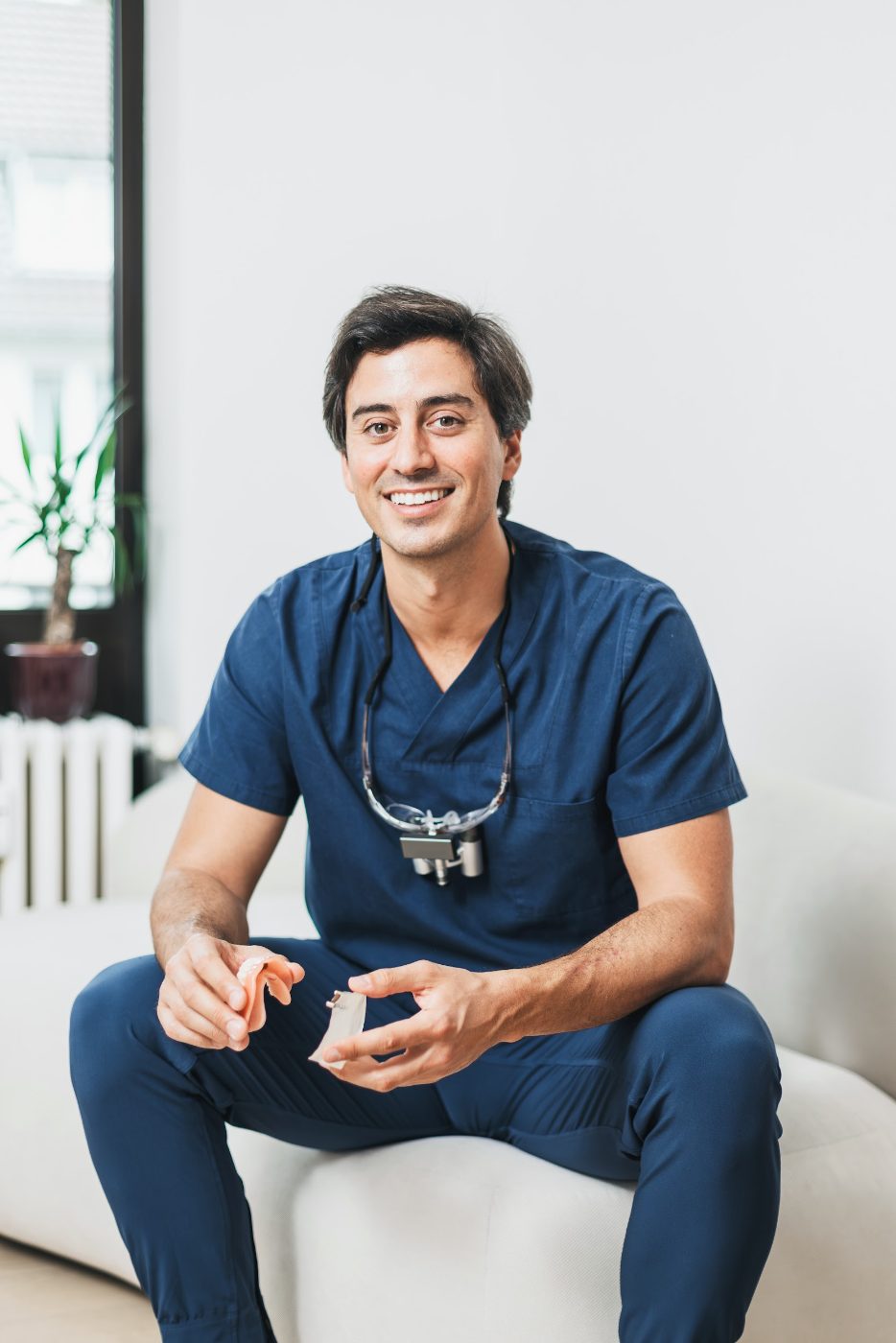
“Fixed full-arch restoration is not four implants and a bridge. It is a bite rebuilt to the right height, in bone that can carry it — designed so you can keep it clean for twenty years.”
Dr. Francisco Javier Rodríguez Ruíz, MSc. · Deutsch · Español · English · Português
INFORMATION SHEETS TO PRINT
Everything to read again and print — before the decision and after the procedure.
A4 documents in four languages. No sign-up, no email address.
-
Dental implants
Structure, process and what determines durability.
-
After a surgical procedure
Cooling, eating, care — and the warning signs.
-
Implant passport & aftercare
Your aftercare plan and home care.
-
Understanding the treatment and cost plan
Fixed subsidy, your share and the right questions.
ONE LEVEL DEEPER · 4–5 PAGES
Patient brochure “All-on-X”
Process, timescales, limits and the most frequent questions as an A4 document — short version (4 pages) directly, detailed version (13 pages) in German, English and Spanish. The information sheet above summarises the essentials on two pages; this brochure goes considerably deeper.
RELATED TREATMENTS
Ask what your jaw allows.
The 3D scan at the first appointment shows us — and you — whether a fixed full-arch restoration is possible.