AESTHETIC DENTISTRY · WHITENING DÜSSELDORF
Is whitening harmful to teeth?
Done properly on a healthy foundation, whitening is gentle — here is what it can realistically achieve, and what it cannot.
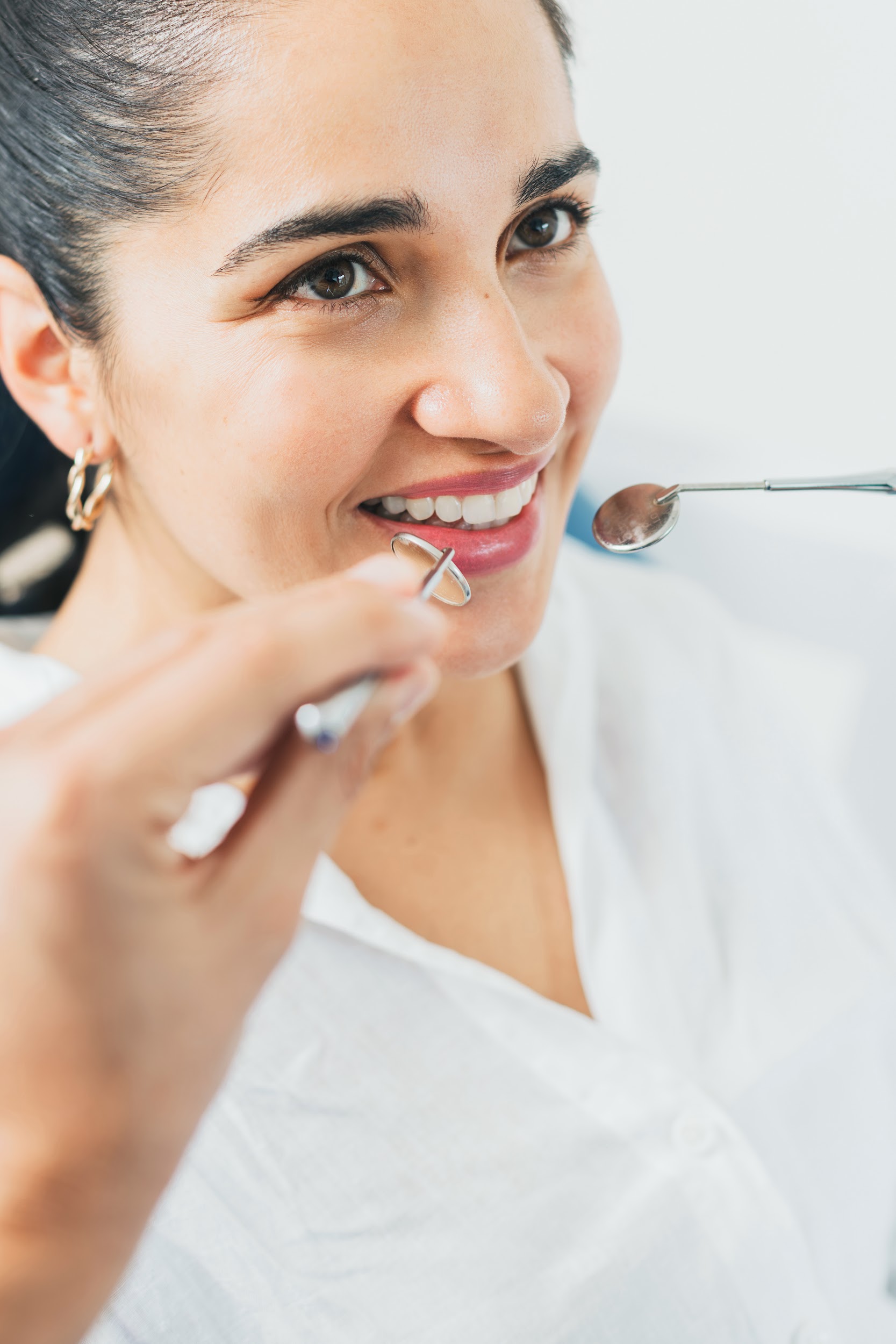
Is whitening harmful to teeth?
According to current knowledge, no — not when carried out properly on healthy teeth. The peroxide compound acts on colour molecules, not abrasively on the surface.
METHODS
Two routes to a brighter smile.
AT THE PRACTICE
In-office whitening
A higher-concentration gel, gum protection and controlled application by the practice team — visible whitening usually in one session of about 60–90 minutes.
- — Fastest result
- — Ideal before an occasion
- — Maximum control
AT HOME, DENTIST-SUPERVISED
Home whitening with trays
Individually made trays and a lower-dosed gel for use at home over one to two weeks — a gentler course, result well controllable.
- — Gradual whitening
- — Flexible around daily life
- — Trays reusable for touch-ups
Individual discoloured, root-treated teeth can be whitened from the inside in a targeted way (internal whitening) — we advise you on which route suits your findings.
COSTS
What does whitening cost?
The short answer: whitening is a private service; the price depends on the method and scope. Before treatment we recommend a professional cleaning — it removes surface staining and improves the result. You receive a clear cost overview in advance.
DURABILITY
How long does the result last?
Usually one to three years, depending on diet and smoking habits. Coffee, tea, red wine and nicotine shorten the effect; regular prophylaxis and occasional touch-ups with the home tray extend it. Fillings and crowns do not whiten along with the teeth — we take that into account when planning.
We determine the starting shade beforehand and check the result in the mirror. The goal is a white that suits your face — not the lightest one technically possible.
FREQUENT QUESTIONS
Whitening — answered briefly.
Does whitening damage the enamel?
According to current knowledge, no, if carried out properly on healthy teeth. The peroxide compound acts on colour molecules, not abrasively on the surface.
How white do the teeth get?
That depends on the starting shade and the cause of the discolouration. Several shade steps are realistic. A uniform, blinding white as seen in adverts cannot be achieved with whitening alone.
What needs to be clarified beforehand?
Caries must be treated, gums inflammation-free and fillings tight-sealed. Through a leaking spot the agent reaches the inside of the tooth and can cause considerable discomfort. A cleaning is also done beforehand, otherwise the peroxide works unevenly through the plaque.
Do fillings and crowns whiten too?
No. Ceramic and composite do not react to whitening agents. Anyone with visible front-tooth fillings should have them colour-matched after whitening — otherwise a new difference appears where there was none before.
How long does the result last?
Roughly one to three years, with large individual differences. What matters most is what is drunk and smoked afterwards.
Do the teeth become sensitive?
Temporary sensitivity to cold during and shortly after treatment is common and fades. For known sensitive teeth, the concentration can be reduced and the application time extended.
When is whitening not done?
During pregnancy and breastfeeding, and in children and adolescents whose tooth development is not yet complete.
RELATED TREATMENTS
INFORMATION SHEETS TO PRINT
What whitening can realistically do.
A4 documents in four languages. No sign-up, no email address.
-
Teeth whitening
Methods, realistic results and what to clarify first.