TOOTH PRESERVATION · PROPHYLAXIS DÜSSELDORF
The most effective treatment is the one you never need.
Professional cleaning and individual prevention keep teeth and gums healthy — and spare you the drill, the cost and the complications. Prophylaxis is the foundation of everything we do.
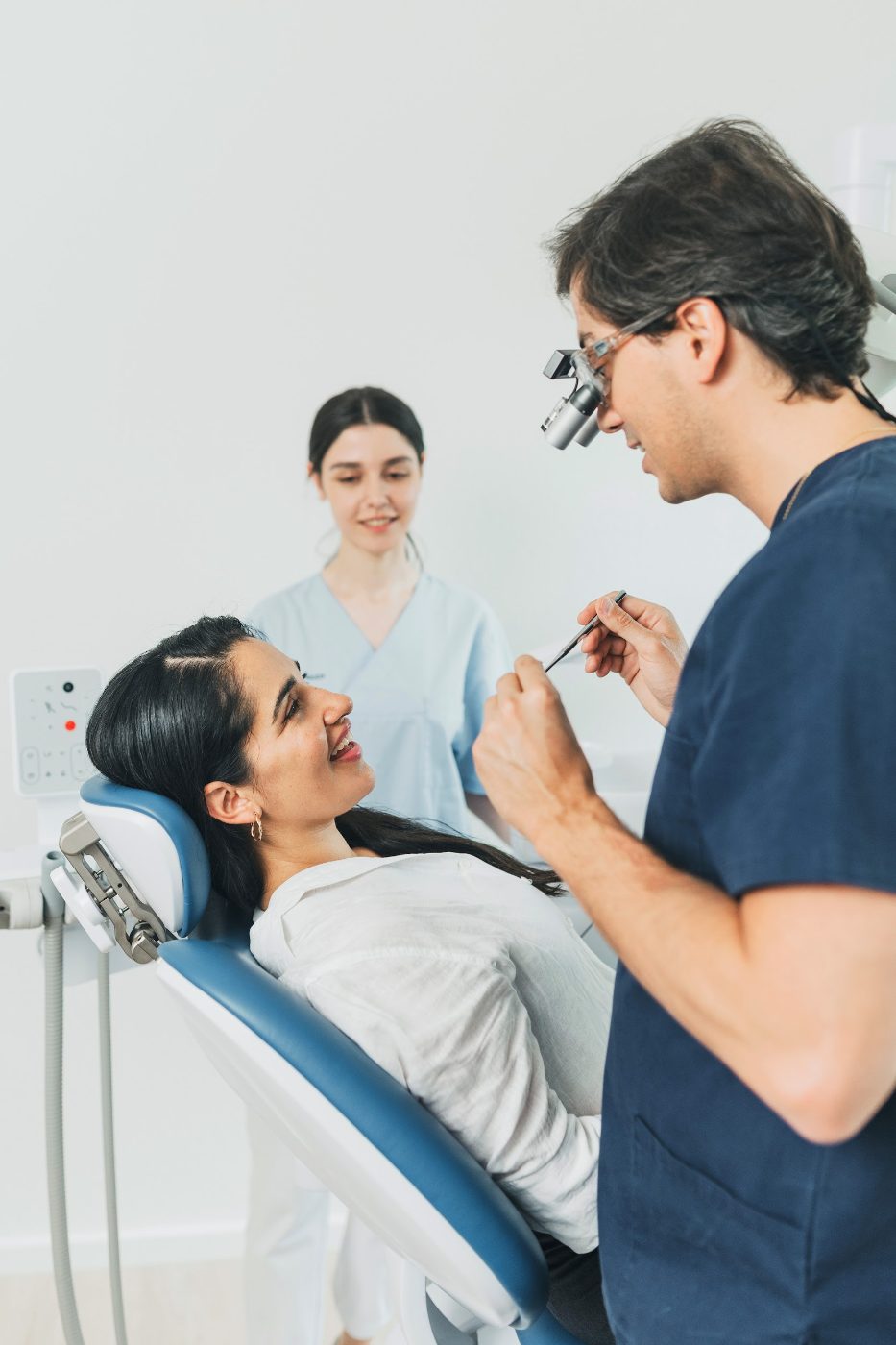
What does professional cleaning (PMPR) achieve?
PMPR removes hard and soft deposits even where the toothbrush and floss cannot reach — in the spaces between teeth and below the gumline. This demonstrably lowers the risk of caries and periodontitis, removes surface staining, and lets us catch changes early. One to two appointments a year are recommended, depending on individual risk.
THE APPOINTMENT
What happens in a PMPR session.
Findings & staining
Deposits and problem areas are made visible — you see for yourself where things are sticking.
Cleaning
Tartar, deposits and staining are gently removed using ultrasound, hand instruments and air polishing.
Polishing, fluoridation & protective coat
Smooth surfaces make new deposits harder to form; fluoride varnish strengthens the enamel. For sensitive teeth we can additionally apply a protective coat to the exposed areas on request.
Individual advice
Brushing technique, interdental care and your personal recall interval.
Duration: about 45–60 minutes. Many insurers subsidise PMPR — ask your insurer or us.
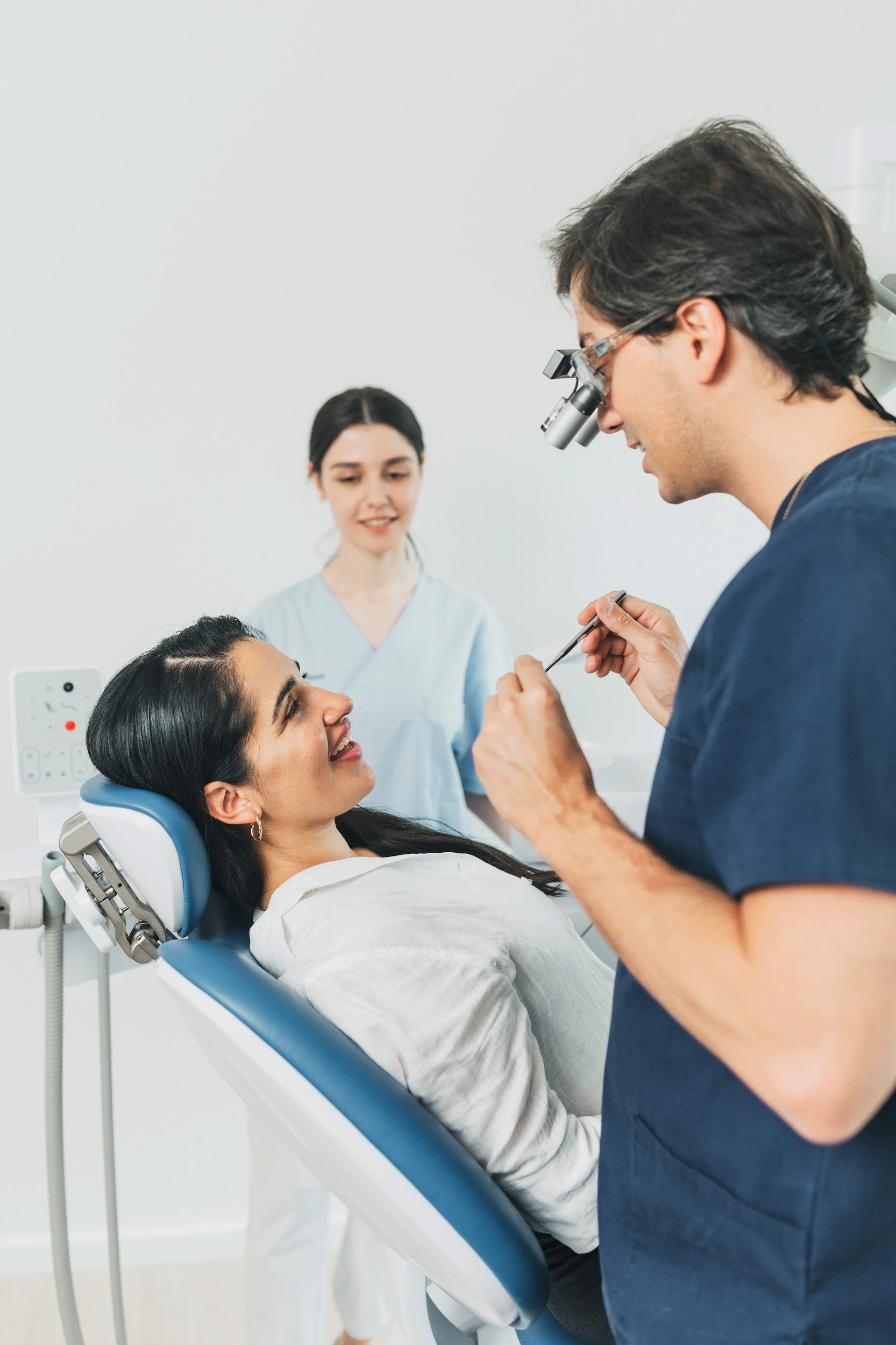
On request we remind you of your next prophylaxis appointment — at the interval that matches your risk, not a fixed schedule.
FREQUENT QUESTIONS
Prophylaxis — answered briefly.
Does professional cleaning hurt?
Usually not. With inflamed gums or exposed root surfaces it can be uncomfortable — tell us beforehand. We then work more gently, apply a desensitising gel, or numb the area locally. Anaesthetic is not routine for a cleaning, but it is available to you. Putting the appointment off out of fear of pain costs more than one session.
My teeth are very sensitive. What can you do?
Two things. During the session we work more gently, use a desensitising gel, and numb the area locally if you want that. At the end we can additionally apply a protective coat to the exposed root surfaces: a thin layer that shields the surface from stimuli and releases fluoride and other ions over months. It is not permanent and it does not replace treating the cause — but it takes the pain out of everyday life. Tell us beforehand and we plan the time for it.
How often is cleaning worthwhile?
Twice a year is a good starting point for healthy adults. Shorter intervals are indicated after treated periodontitis, with implants, with fixed braces, for smokers, with diabetes and during pregnancy. We set the interval by findings, not by a fixed schedule.
Does insurance cover the cleaning?
For statutory patients it is usually a private service. Many insurers contribute through bonus programmes, and some supplementary dental insurers reimburse it in full or in part.
Does cleaning harm the enamel?
No, not when carried out properly. The polish is matched to deposit removal, and the closing fluoridation additionally hardens the surface.
Do my teeth get whiter from it?
It removes staining from coffee, tea and nicotine, which makes teeth look brighter. It does not change the tooth’s own colour — that would need whitening.
Can I drink coffee right after?
Wait about an hour after fluoridation. In the first hours after polishing teeth absorb colour more easily — better to postpone coffee, red wine and tea.
RELATED TREATMENTS
INFORMATION SHEETS TO PRINT
The essentials for home — print it and pin it by the mirror.
A4 documents in four languages. No sign-up, no email address.
-
Prophylaxis, care & bonus booklet
Brushing technique, interdental care and why the bonus booklet is worth it.
-
Checklist for your appointment
What to bring and how the appointment runs.